Our History

Pine Ridge Hiking Club's history is entwined with the history of the Ganaraska Hiking Trail. Read all about it here.

1967
The original idea for a trail was to provide access for naturalists to unspoiled countryside. Harry Gadd, president of the Willow Beach Field Naturalists, envisioned a hiking trail from Cobourg to Harwood along the old Cobourg-to-Peterborough Railroad embankment, but unfortunately he died before work could be started.
On March 31 1967, at a meeting of the Willow Beach Field Naturalists in St. Mark’s Church Parish Hall in Port Hope, Ray Lowes, secretary of the Bruce Trail Association, gave a talk about the Bruce Trail. He also discussed the possibility of sponsoring a similar trail in this area. At that time the Bruce Trail was the only major hiking trail in Ontario and Ray Lowes, its founder and director, was able to provide advice on how to get established.
The talk sparked a great deal of enthusiasm among the members, and the idea developed to establish a new trail. Jack Goering, at Port Hope, reviewed possible routes on a map but because the route proposed by Harry Gadd ended at Rice Lake, it was decided to use the old Midland Railway Line from Port Hope to Lindsay and Beaverton, and continuing to Midland.
The old Midland Railway line is historically important to Port Hope. It was originally conceived as a link to Peterborough and Lindsay. In 1854 a charter was issued to the Port Hope, Lindsay and Beaverton Railway Company to build the line, which was opened in 1858. Twenty years later the line had been extended all the way to Georgian Bay. Like many pioneer projects, the company ran into financial difficulties because of the difficult terrain and by 1893 it had been absorbed into the Canadian National Railway system. From a hiking perspective the old abandoned Midland Railway Line provided access to the countryside and it cut through a very scenic and historic section of the Ganaraska Watershed.
This idea was taken up as a Centennial Project and Jack Goering formally proposed the development of the trail, to be named the Ganaraska Trail. The concept was warmly supported by the members and by the president of the club, Pat Lawson. As a first step it was agreed to clear a trail from Port Hope to Campbellcroft in the hope that it would be later extended to Lindsay, and perhaps after that to include the Buckhorn Wilderness area with a possible side trail to Peterborough.
Guests at the meeting included D.C. Sadler, president of the Federation of Ontario Naturalists, Victor Wilson, vice president of the Ganaraska Region Conservation Authority, and representatives of the Boy Scouts and area landowners. At the meeting J.A. Reynolds, chairman of the Port Hope Parks Board, stated that the Parks Board intended to clear a trail along the Ganaraska River from Barrett Street to north of the 401 highway.
Following the March meeting the club moved quickly. On the afternoon of April 12, 1967, the Ganaraska Region Conservation Authority gave a “verbal nod of agreement” for the creation of a Ganaraska Hiking Trail, and on April 23 a group from the Willow Beach Field Naturalists hiked from Bethany to Millbrook to explore possible routes.
It had been hoped that the trail would start at the Barrett Street Bridge over the Ganaraska River in Port Hope, but this was not possible because of the removal of the ties from the ‘Old Iron Bridge’ further up the river. Also the reluctance of some landowners to allow the trail to cross their property, following problems with trespassers, prevented access to the preferred route south of the 4th line.
Other hikes followed to explore or blaze the trail that year. On May 27, a club hike to explore a portion of the newly blazed trail started from the home of Pat Lawson on Ward Street in Port Hope. The May edition of WBFN newsletter, The Curlew, reported that 25 miles of the trail had been walked on. The report, and subsequent ones in The Curlew, used a hand-drawn version of the Ganaraska Hiking Trail Association emblem.
By late spring the Willow Beach volunteers decided to form the Ganaraska Hiking Trail Association and the May/June 1967 edition of the Federation of Ontario Naturalists Newsletter included an invitation to subscribe with a membership fee of $2.
The opening ceremony took place on the railway bridge and the ribbon was cut by Ray Lowes from the Bruce Trail Association, with Jack Goering looking on. Also present at the ceremony were Russell Honey, MP for Durham; Alex Carruthers, MPP for Durham; Douglas Sadler, president of the Federation of Ontario Naturalists; Dr. Thomas Symons, president of Trent University; Michael Wladyka, Mayor of Port Hope; and Angus Scott, headmaster of Trinity College School.
Using a grant from the Federation, and by scrounging materials, trail markers and stiles were installed along the route. In December 1967, the first meeting of the new Ganaraska Hiking Trail Association was held at the home of Pat Lawson. There were 17 members present, from Lindsay, Peterborough, Millbrook, Port Hope and Cobourg. They decided to continue the trail to Lindsay, and various groups took on the responsibility for blazing and maintaining sections of the trail – one group from Lindsay to Omemee, one from Omemee to Bethany and another from Bethany to Millbrook. For the most part the trail followed the old railway line.
The official opening of the trail occurred on April 21, 1968 with a walk from Port Hope to Millbrook. A Ganaraska Hiking Trail Association Headquarters was established at Mill and Walton Streets in Port Hope, for hikers to register. Walks were arranged from several different starting places for people to walk five, 10 or 15 miles, all finishing on the railway bridge on 10th Line in Hope Township, just west of the Millbrook Road, for the official opening.

Jack Goering paid tribute to the help received from Weston Bannister, Reeve of Hope Township, in obtaining permission from many landowners to allow the hikers across their land.
After the ceremony, the 300 hikers who registered hiked three and a half additional miles to the farm of Russell Kennedy, a few miles south of Millbrook, for the Pancake Festival.
According to one report, the 300 hikers helped to break the attendance records for the Pancake Festival. There were 75 hikers from the Bruce Trail Club led by their president William Cannon. A large number of those taking part were not naturalists or members of hiking clubs, but people who simply welcomed the opportunity to walk in the countryside without having to ask permission of the landowners or to climb over every fence line.
Scott Young writing in the Globe and Mail lamented the fact the only thing that restrained him from taking part in the opening walk was that the trail never went anywhere near a pub!
What a day it must have been!
Jack Goering continued to work for the extension of the trail and in 1969 announced that it seemed feasible to extend the trail to meet up with the Bruce Trail. Eventually the final link was made in 1992 at McKinney's Hill, Glen Huron, a few miles south of Collingwood.
1970s, 80s, 90s

Between the late 70's and early 80's, the Ganaraska Trail was incomplete and divided into two unconnected sections. With the immense amount of work facing the association, it was touch-and-go whether the trail would be completed or whether the club would even survive. In 1983, a resolution was presented at the Annual General Meeting to disband the club and donate the funds to the Bruce Trail Association. Fortunately, the motion was voted down and a new group of enthusiastic volunteers were elected onto the board. There were several forgotten sections along the trail that had to be re-blazed and one huge unexplored section that ran from Bobcaygeon to Orillia, a large part of which was wilderness.
Paul McCreath was president at this time and as a former avid snowmobiler he hit upon the idea of using snowmobiles to develop the new trail. He and his friends started from the two ends following road allowances and abandoned rail lines. These were the easy parts. The final wilderness section in the middle presented the big challenge – with lakes, beaver ponds and wetlands. This took several years and Paul and his volunteers used a mix of snowmobile, canoe, hiking and camping to get access. The section near Loon Lake was blazed with nailed plastic markers because it was too cold to paint! The wilderness section is now part of Queen Elizabeth Provincial Park – established to commemorate the Queen's Golden Jubilee visit to Ontario in 2002.
Jack Goering and Pat Lawson stand in front of the original cairn and plaque, laid in 1993 in Port Hope, signifying the start of the trail.
Don Ballantyne was a member of the club, and in an article in the Port Hope Evening Guide he described the trail maintenance that was done, which included rebuilding bridges and stiles over private land and annual garbage pickups along the trail. He also mentioned that hikes weren’t held in the summer months because of mosquitoes.
At this time the legwork to establish the trail had been done, but the membership had become dormant, withonly about half a dozen members. By now the GHTA had been organized into sections and Nicole Corbeil became President of the Pine Ridge Hiking Club, which was responsible for the southern section of the trail. She applied her exceptional organizing skills to build the membership. She began to advertise the weekly hikes in the Cobourg Star and Port Hope Evening Guide and membership in the Pine Ridge Hiking Club increased to 40 members. The club was organizing weekly hikes averaging 10 kilometres with up to two dozen people taking part in each hike.

An article in the Northumberland News in July 1994 reported two young people from the British Trust for Conservation Volunteers helped build two small bridges across the Ganaraska River at the Jocelyn Street end of the trail. Barry King of the Cobourg Star interpreted the development with this cartoon.
In 1997 with help from the Peterborough Club, 500 brand new Guide Books with text and maps covering the entire trail were produced, with the collating and binding of the book done at the Port Hope Health Unit. The Cobourg Star featured an article and Barry King satirized it with one of his cartoons. Family membership fee was $15 and the cost of the guide was $8.
A new bridge was built across a tributary of the Ganaraska River on the property of Bill and Penny Harris near 4th Line. This was done to reroute a section of the trail off Sylvan Glen Road. And for the first time the club took part in the Canada Day parade in Port Hope, alternating in later years with the Cobourg parade.
And in September that year a hike took place starting at the Cairn in Port Hope to celebrate the 30th anniversary of the founding of the GHTA. Peter Verbeek helped celebrate the anniversary by leading a series of hikes to complete the first end-to-end of the entire trail.
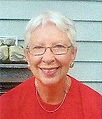
Nicole Corbeil
President 1996-1998
Bob Short succeeded Nicole Corbeil as the next President, from 1998 until December 2003. Each new president puts his or her own mark on the club. Bob focused on recruiting new hike leaders. He simply asked people! Along with new hike leaders came new ideas. Summer town walks were introduced around Cobourg and Port Hope. These invariably finished up at a pub where people could chat and socialize.
Often, from these informal contacts, new ideas emerged. Bicycle and cross-country skiing outings were introduced and hikes were inserted into the schedule to encourage people to complete the Pine Ridge End-To-End. Wednesday hikes were introduced in the fall of 2000.
After 2000. there was a steady increase in membership, due mainly to an influx of retirees from Toronto; these newcomers also changed the personality of the club. While the conservation aspect was still important, the range of activities increased to meet the social needs of members and provide opportunities for healthy exercise. The membership had increased to 100. There were over 70 hikes a year and some attracted up to 30 or 40 participants. Scott Young would be pleased to know that several hikes did finish up at a pub!
After Bob retired as president he continued as trail director in charge of trail maintenance.
1998-2003

Colin Banfield became president in December 2003 and concluded his term 2006.
Colin had moved to Cobourg in 2001 after retiring as a climatologist from Memorial University of Newfoundland, so he is occasionally blamed for any unpleasant weather. During Colin’s term training workshops were held for hike leaders, including First Aid. He introduced fixed terms for presidents, with vice-pesidents as potential successors, and started a club photo album, subsequently much expanded in digital form by John Kurowski.
Colin also broadened the repertoire of hike events by introducing getaway trips. The first one was to the eastern end of the Bruce Trail near Niagara on the Lake, where members could combine hiking with the enjoyment of Shaw Theatre, shopping and sampling local wines.
He also organized the club’s first overseas trip to South Wales in 2006, to hike the Brecon Beacons and the Pembrokeshire Coast Trail. Subsequently, during the years 2006 - 2011, getaway club hiking trips were held on the Bruce Peninsula near Tobermory, the Collingwood area, the Westport area north of Kingston, Killarney Provincial Park and Newfoundland’s Avalon Peninsula. Many members also hike overseas with Comfortable Hiking, the club’s website sponsor.
2003-2006

David Beevis was President from 2006 to 2009. David worked to provide input to the Northumberland Forest Advisory Review Plan to ensure the Oak Ridge Trail Association’s trail continued to run through the forest.
During David's term of office, the club organized its first "Through the Hikers Lens" photographic exhibition. This has become an annual event coordinated by Bruce Williamson, then subsequently by Lee Wakelin and David Didur. It has been held at venues in Cobourg and Port Hope, where members can display their artistic photographic skills.
David also arranged for the club to participate at the grand opening of the Ganaraska Trail Public School. David, then the past-president, attended along with founders Jack Goering, Pat Lawson, Mike Pidwerbecki (president of the GHTA), Bob Bowles (V.P and Public Relations Director of GHTA), and the club's new president, John Kurowski.
2006-2009

2009-2012

John Kurowski's term as president ran from 2009-2012. In 2008 and again in subsequent years, Phil Mabey organized club members into a dragon boat team for the annual Northumberland County United Way fundraiser "Challenge The Dragon". In 2013 and 2014, our club team placed in the top three finishers and raised nearly $3,500 – the top fundraiser of any entrant!
In 2010, four members of the club, Bob Short, George Atto, Colin Banfield and David Beevis , were presented with Ontario Volunteer Service Awards by Northumberland MPP Lou Rinaldi at the Volunteer Annual Award ceremony in the Cobourg Lions Community Centre.
During John's term short hikes were introduced to accommodate hikers who may otherwise be intimidated by the club's tougher hikes. These were very successful, regularly attracting two dozen hikers and further increasing the membership.
The club organized two hikes for the Ontario Heritage Trust Open Trails program, one in Sylvan Glen and one in Northumberland Forest. Getaways to hike the Bruce Trail became an annual event and several members completed the 130 kilometre Frontenac Challenge and an annual social evening provided opportunities for members to present illustrated slide shows about their international hiking experiences.
By this time the club had 16 hike leaders and a repertoire of nearly a 100 local hikes. The club introduced training programs for hike leaders and approved a disaster recovery plan to deal with possible hiking accidents.
Rita Zeran succeeded John Kurowski as the next president from December 2012 to December 2015.
During her tenure, thanks to a very generous donation from a hiking member, Rita had the cairn located at the southern end of the Ganaraska Hiking Trail refurbished with a new plaque. The new plaque reads:
"Southern Terminus of the Ganaraska Hiking Trail. The Ganaraska Hiking Trail was officially opened on April 21,1968. It begins in Port Hope along the Ganaraska River, eventually connecting to the Bruce Trail near Glen Huron. The Ganaraska Hiking Trail has been expanded to Midland and to Wasaga Beach and with side trails is now about 500 kilometres long."
"Many thanks to Jack Goering and Pat Lawson, our founding members, for their dedication and commitment to this project."
"This plaque was funded by the estate of Phil LaPenna, a longtime member of the association who encouraged others to hike.”
2012-2015


2015-2018

Stan Muldoon succeeded Rita Zeran as president of Pine Ridge Hiking Club (PRHC), from December 2015 to December 2018. Here is a summary of significant events during Stan's time as president.
June 2016: Sadly, Jack Goering died peacefully in his sleep at home on Monday, June 6, 2016 (age 92). Pat Lawson passed away soon after on June 29, 2016 after a long and painful struggle with osteoarthritis (age 87). Jack and Pat are considered the founders of the Ganaraska Hiking Trail, beginning with their efforts in 1967, along with other members of the Willow Beach Field Naturalists. As passionate environmental activists, both Pat and Jack dedicated years of active involvement to the growth of the Pine Ridge Hiking Club and the Ganaraska Hiking Trail Association.
May 2017: Opening of the Patricia Lawson/Jack Goering Trail. About 80 people attended a dedication ceremony on May 27 including Port Hope Mayor Bob Sanderson, GHTA President David Royston and members of the Lawson and Goering families. It was particularly heartening to see so many former hikers from our club in attendance. With the financial support of the Municipality of Port Hope a sign detailing Jack and Pat's role as founders of the GHTA has been erected at the southern entrance to the "Pat/Jack Trail" on Barrett St. in Port Hope.
January 2018: An agreement was reached with the Ganaraska Region Conservation Authority to allow all GHTA clubs full access to the trails in the Ganaraska Forest. In addition, the Ganaraska Trail will return to the forest rather than follow municipal roads along the perimeter. This is a much more scenic route away from motorized vehicles. At the October 2018 AGM of the GHTA, a motion was passed enabling the GHTA to cover the full costs of the agreement ($300 annually).
April - September 2018: 50th Anniversary activities celebrating the opening of the Ganaraska Trail on April 21, 1968. A number of events were planned for the PRHC and across the GHTA. Beginning on April 21, a series of eight Water Relay hikes took place in our 63-km section of the trail. Water from Lake Ontario was carried on these hikes before being passed to the Kawartha Club in June. Water from Georgian Bay was relayed by western clubs of the GHTA to become part of a September weekend in Orillia to celebrate the 50th Anniversary. These events heightened our awareness of the significance of the Ganaraska Trail.
In addition to these events, the club saw an increase in the number of Hike Leaders over the past few years.
2018-2021

Bill Zeran was club president from 2018-2021. Here is a note he wrote in January, 2022.
"Within the threeyears of my presidency, the GHTA decided to purchase an app (namely ONDAGO). ONDAGO allows you to easily locate yourself on electronic maps while staying offline. A great tool when you want to hike the End-to-End of the Ganaraska Trail from Port Hope to Georgian Bay. All nine clubs needed to record the correct kilometres, trail coordinates, description of noted areas, history, website addresses and parking areas. A committee was set up and completed by June 30, 2019. A new route to bypass some roads on the original trail was made through the Ganaraska Forest.
"Also, all hiking done in the Ganaraska Forest must be approved by the manager as well as all trail maintenance.
Unfortunately because of Covid-19, all social functions were put on hold and hiking as a group has been somewhat curtailed."
2021-2024

Jay Sherwin succeeded Bill Zeran in 2021.
By the spring of 2022, Covid gathering restrictions had ended and hike participant numbers were no longer restricted. A post-pandemic pent-up demand for outdoor social activities, and a continuing inflow of new residents into the Cobourg and Port Hope area resulted in many new members and a noticeable increase in hiker numbers. The average number of hikers went from 10-12 pre pandemic to 15-18 post-pandemic. Interest in the Pine Ridge Club proved to be more than just a post-Covid bump as membership numbers increased by 40% between 2022 and 2024.
An initiative of the president during the term was to increase awareness of hikers to the historic presence of First Nations on the lands of our hike routes. Actions taken on this initiative were the scheduling of an annual autumn hike at the Alderville First Nation Black Oak Savanna and a mid July hike that ended with a visit to the Alderville Pow Wow.
During the three-year period, initiatives advanced by club members were instrumental in strengthening the club. One member’s work to revamp the PRHC website making it both more attractive and user friendly was no doubt a factor in the inflow of new members. Another club member’s efforts to compile the club Hike Catalogue into an on-line document greatly improved the experience of Hike Leaders in assessing and selecting hikes for club outings.
Long time club member Bob Short chose a day in June of 2022 to retire as a Hike Leader. A brief ceremony was held at the beginning of Bob’s last guided hike to honour him for his years of dedication to the PRHC as hike leader, club president and caretaker of the club hike catalogue.
Storm damage in the Ganaraska Forest and liability concerns raised by Ganaraska Forest staff resulted in closure of the section of the GHTA trail through the forest. To maintain integrity of the GHTA trail, the trail was re-routed along municipally owned road allowances, following the same route used during previous trail closures through the forest.
With the end of the pandemic, the annual club social functions returned. The Port Hope Legion became the meeting site, and it served perfectly for the groups of 40-50 members that attended the AGMs in December and an evening of Hike Talks in March.
The Through the Hikers Lens photo show also returned for exhibitions at the Port Hope Library. Photos displayed in the exhibit were often inspirations for club members to travel and hike in other parts of the world.
During the three-year period it was noted that a promise of food after a hike, whether it be at a pub or at a hiker’s home resulted in a big turn out of hikers. Perhaps it was a post-pandemic effect, but the benefits and pleasures of outdoor exercise and socializing were recognized and as a result, the PRHC thrived.